
Copper Busbars Manufactured in the UK & Cut to Your Specification

Custom copper busbars designed and manufactured in the UK for reliable power distribution, electrical performance and long-term durability.

Copper Busbar Manufacturers

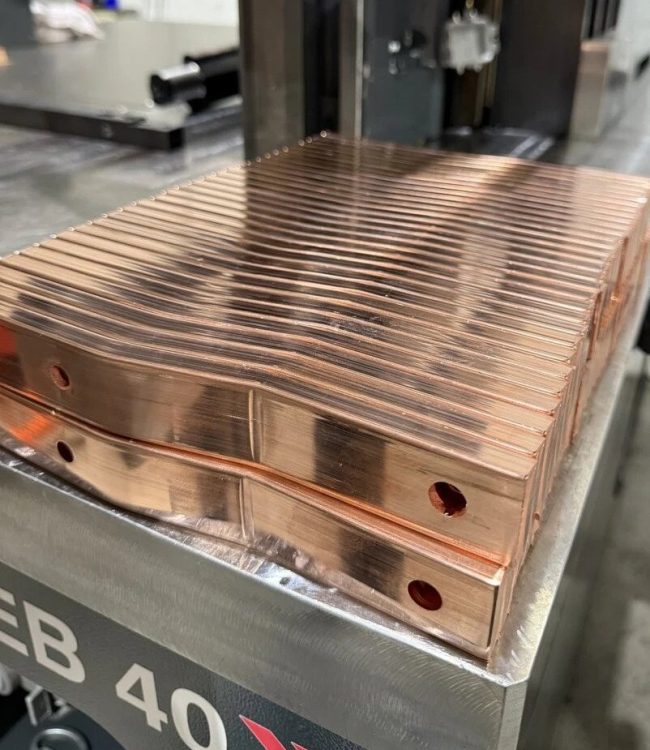
ILF Products is a family-owned UK copper busbar manufacturer based in Cannock, Staffordshire, serving electrical and power distribution applications. We combine extensive busbar production experience with EHRT punching and bending technology. That lets us supply accurate, repeatable and application-specific copper busbars to customers who cannot compromise on dimensional control.

Our busbars are used across the power, rail, medical, marine, data centre, motorsport, aerospace and industrial sectors. Specifically, these are industries where conductivity and manufacturing precision matter.

What is a Copper Busbar?

A copper busbar is a solid electrical conductor that distributes power within an electrical system. It carries current between the supply and the circuits it feeds, for example inside a switchboard.

Copper is widely used for busbars because it offers excellent electrical conductivity, strong thermal performance, good mechanical strength and a long service life. You will find copper busbars in switchgear, panel boards, busway enclosures, generators, motors, transformers, control panels and high-current power distribution systems.

busbars

Discuss Your Requirements with an Expert Today

Why Choose ILF for Copper Busbars?

Copper conducts electricity efficiently, handles heat well and resists corrosion. For these reasons, industries from power distribution to aerospace specify copper busbars. Design engineers and buyers choose ILF Products for custom copper busbars because of the following:

2

EHRT Technology

Our EHRT production equipment delivers accurate punching and bending, so repeat batches of busbars hold consistent dimensions.

1

UK Manufacturing

Every copper busbar is manufactured at our Cannock, Staffordshire facility, which means faster response times, controlled production and dependable UK supply.

3

Bespoke Production

We produce copper busbars to drawings, samples, electrical layouts and project-specific requirements, so that each part matches your design.

4

Complete Production Support

As well as fabrication, we support cutting, punching, bending, CNC machining, plating, sleeving, coating and finishing, all at our Cannock site.

Copper Busbar Materials

Many copper busbars are manufactured from Cu-ETP copper, because it delivers strong electrical performance and suits power distribution applications. The table below summarises its typical composition and properties.

CategoryDetailValue
Chemical CompositionCopper - Cu99.90%
Chemical CompositionBismuth - BiMax 0.0005%
Chemical CompositionLead - PbMax 0.005%
Chemical CompositionOxygen - OMax 0.040%
Chemical CompositionOthers0.03%
Mechanical PropertyTensile Strength250 N/mm²
Electrical PropertyResistivity0.0172 Ωmm²/mm
Physical PropertyDensity8.9 kg/dm³
Current RatingCopper Current Capacity1 sq.mm of copper can withstand 1.2 amperes

Sample can be produced on request

switchgearbusbars

Built Around Electrical Performance

High Current Distribution

Copper busbars are suited to applications where current needs to be distributed efficiently and reliably.

Switchgear and Panels

Used in switchgear, control panels, panel boards and busway enclosures.

Power and Energy Systems

Suitable for transformers, generators, motors, renewable energy and industrial power systems.

Demanding Sectors

Used across rail, marine, medical, data centre, motorsport, aerospace and specialist industrial projects.

Discuss Your Requirements with an Expert Today

Copper Busbar Applications

Switchgear

Inside switchgear, copper busbars carry current reliably within a compact footprint, so panel designers can keep enclosures small without compromising performance.

Panel Builders

Control panels, panel boards and electrical distribution systems all depend on copper busbars, so panel builders specify them for consistent, ready-to-fit connections.

Data Centres

In data centre infrastructure, copper busbars distribute high power efficiently and support dependable uptime.

Rail and Transport

Copper busbars serve rail, motorsport, marine and transport applications where reliability and performance are essential, because these environments place high demands on every electrical connection.

Medical and Aerospace

Specialist sectors such as medical and aerospace specify copper busbars where controlled manufacture, precision and dependable electrical performance must be assured.

Finishing and Protection Options

Every copper busbar can be supplied with finishes and protective options that support performance, installation and service life. Specifically, we offer the following:

Plating

Tin, nickel, silver and other plated finishes are available. Each supports solderability, conductivity, corrosion resistance and contact performance, so plated copper busbars suit demanding terminations.

Sleeving

Where required, sleeving provides insulation, identification and an additional layer of protection for the busbar.

Coating

Coating options, including Polyolefin and UPVC, give the busbar added protection or insulation. Coated bars suit installations where clearances or environmental conditions call for extra protection.

Machining and Preparation

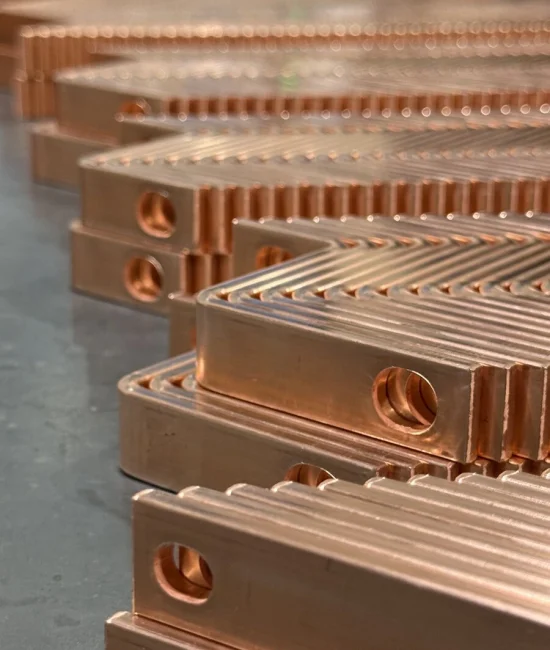
Busbars can be cut, punched, drilled, bent and machined so that they drop straight into the final assembly.

Copper Busbar Design Considerations

Selecting the right copper busbar depends on the electrical load, available space, fixing points, bend requirements and operating environment. Before production begins, ILF Products can help you review:

  • Current carrying requirements
  • Width, thickness and length
  • Bend angles and clearances
  • Hole positions and fixing points
  • Plating, sleeving or coating requirements
  • Installation and assembly constraints

Copper Busbar FAQs

What are copper busbars used for?

Copper busbars are used to distribute electrical power in switchgear, control panels, panel boards, busway enclosures, transformers, generators, motors and industrial electrical systems.

Why is copper used for busbars?

Copper is used because it offers excellent electrical conductivity, low resistance, good thermal performance, mechanical strength and long service life.

Can ILF manufacture copper busbars to a drawing?

Yes. We can manufacture copper busbars from drawings, samples, dimensions, sketches or written briefs.

What copper busbar sizes can ILF manufacture?

ILF can manufacture copper busbars from 15mm to 200mm wide and 3mm to 16mm thick.

Can copper busbars be punched and bent?

Yes. Copper busbars can be punched, drilled, bent and formed using advanced EHRT production technology.

What bending accuracy can ILF achieve?

ILF can support bending accuracy of +/-0.1 degrees, depending on the design and application.

Can copper busbars be plated?

Yes. Plating options can include tin, nickel, precious and semi-precious metals, depending on the requirement.

Can copper busbars be sleeved or coated?

Yes. Sleeving and coating options are available, including Polyolefin, UPVC and other protective finishes.

What industries use copper busbars?

Copper busbars are used across power, rail, marine, medical, data centre, motorsport, aerospace and industrial applications.

Can ILF produce sample copper busbars?

Yes. Sample busbars can be produced on request before larger production runs.

Can ILF help with copper busbar design?

Yes. Our team can advise on material, size, current carrying requirements, bending, fixing points, plating, coating and production method.

Should the full copper busbar rating table be included?

Yes, but it is best placed in a technical data section, accordion, tab or downloadable guide so users can access it without making the main page too heavy.

Request a Quote

If you’d like a quote, simply fill in the form below and one of our team will contact you.

    Extra information

    Upload Drawing

    Accepted file types: jpg, gif, png, pdf, dxf, dwg. Max. file size: 5 MB.

    Upload Further Documentation