
Extrusion Methods
Understanding how copper and other metals are formed into consistent bars and profiles through controlled extrusion processes.
How Are Extrusions Made?
Extrusion is a manufacturing process used to create long, consistent metal sections by forcing material through a shaped die under pressure. The shape of the die determines the cross-section of the finished extrusion, allowing manufacturers to produce everything from straightforward bars and rods to more specialised profiles.
Copper is particularly well suited to extrusion because it can be formed while retaining the electrical conductivity, durability and corrosion resistance that make it valuable across electrical, engineering and industrial applications.
At ILF, copper extrusion forms part of our wider UK copper manufacturing capability, supporting the production of copper bar alongside cutting, punching, bending, CNC machining and finishing.
What Is the Extrusion Process?
The extrusion process begins with a solid piece of metal, commonly referred to as a billet. The material is prepared and, where required, heated before being placed into an extrusion press.
Pressure is then applied to force the material through a precision die. As the metal passes through the die, it takes on the required cross-sectional shape and emerges as a continuous length.
The extrusion can then be cooled, straightened and cut before undergoing any further processing required by the finished specification.
Discuss Your Extrusion Requirements with an Expert Today
Common Extrusion Methods
Different extrusion methods can be used depending on the material, profile, production requirements and characteristics required from the finished product.
Indirect Extrusion
During indirect, or backward, extrusion, the die moves towards the stationary billet rather than the billet moving through a fixed die.
This arrangement reduces friction between the billet and container and can improve efficiency and surface quality for suitable applications.
Direct Extrusion
Direct extrusion, sometimes called forward extrusion, uses a moving ram to push the billet through a stationary die.
It is one of the most common extrusion methods and can be used to manufacture a broad range of metal bars and profiles.
Hydrostatic Extrusion
Hydrostatic extrusion surrounds the billet with a pressurised fluid that transfers force to the material.
Reducing direct friction between the billet and the extrusion equipment allows high levels of deformation and makes the process suitable for more specialised manufacturing requirements.
Hot Extrusion
Copper is commonly heated before extrusion to make the material easier to form. Heating the billet above its recrystallisation temperature reduces resistance to deformation and helps the copper flow through the die more effectively.
Copper Extrusion at ILF
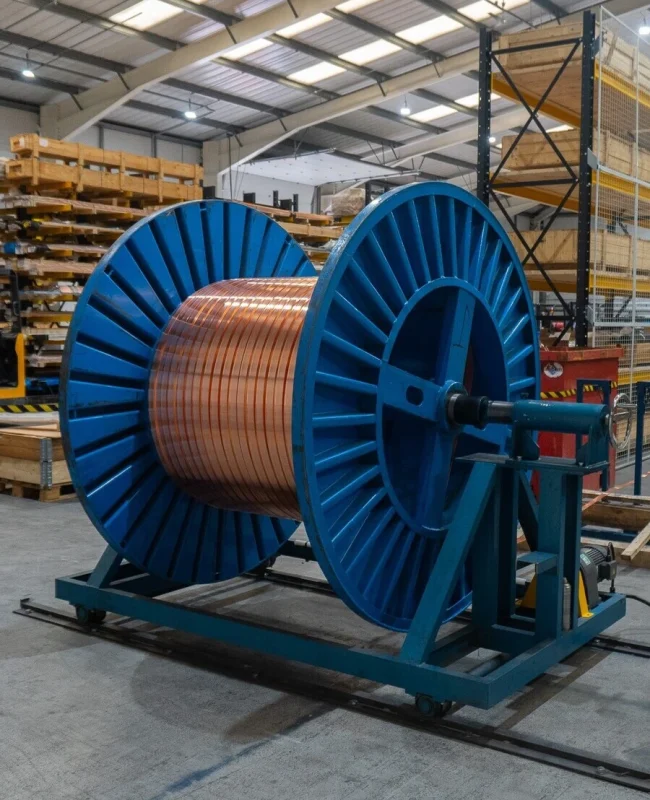
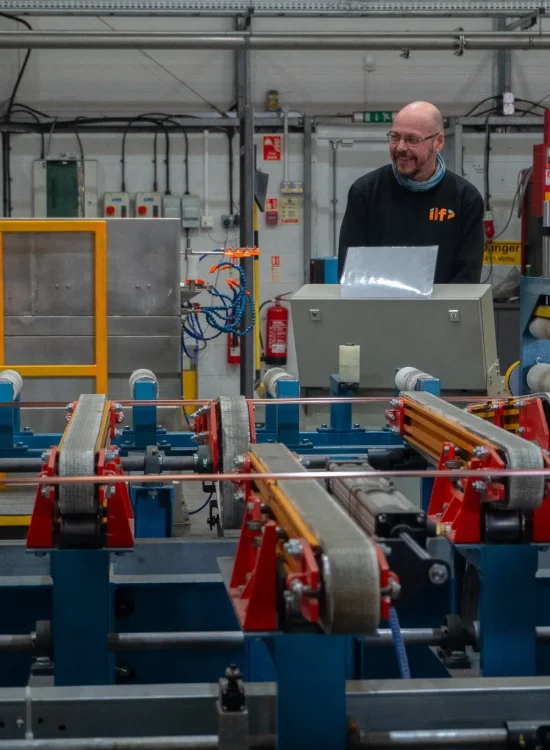
ILF has invested in copper extrusion capability at its Cannock manufacturing facility, allowing copper bar to be produced directly in the UK.
The company can produce copper flat bar from 75 mm² to 3,000 mm², with lengths available up to 10 metres. Direct UK production also helps ILF support shorter lead times, smaller minimum order quantities and greater control over copper supply.
Once produced, copper can also move through ILF’s wider manufacturing operation for cutting, punching, bending, CNC machining, linishing and other specified finishing processes.
Why Use Extrusion?
Extrusion provides an efficient way of producing consistent metal sections, particularly where the same cross-sectional profile is required over longer lengths.

Consistent Profiles
A precision die creates a consistent cross-section along the length of the extrusion, supporting repeatability across production quantities.

Flexible Shapes and Sizes
Extrusion can create straightforward bars as well as more complex profiles, depending on the material and production method.

Efficient Production
Once the required tooling and manufacturing process are established, extrusion can provide an efficient production method for repeat quantities.

Reduced Secondary Machining
Producing the material closer to its required finished profile can reduce the amount of metal that subsequently needs to be removed through machining.
Extrusion Methods FAQs
Metal extrusion is a manufacturing process in which metal is forced through a shaped die under pressure to create a continuous bar or profile with a consistent cross-section.
Common methods include direct or forward extrusion, indirect or backward extrusion and hydrostatic extrusion. Different methods manage the movement and friction between the billet, die and extrusion equipment in different ways.
Direct extrusion uses a moving ram to force the billet through a stationary die. It is one of the most widely used methods for producing extruded metal sections.
Indirect extrusion moves the die towards a stationary billet. This reduces friction between the billet and the extrusion container and can provide advantages for suitable profiles and materials.
Heating makes the copper easier to deform and allows it to flow through the extrusion die more effectively while maintaining a controlled material structure.
Yes. ILF operates copper extrusion equipment at its Cannock facility and is currently described both by ILF and Staffordshire Chambers of Commerce as the UK’s only commercial producer of copper bar.